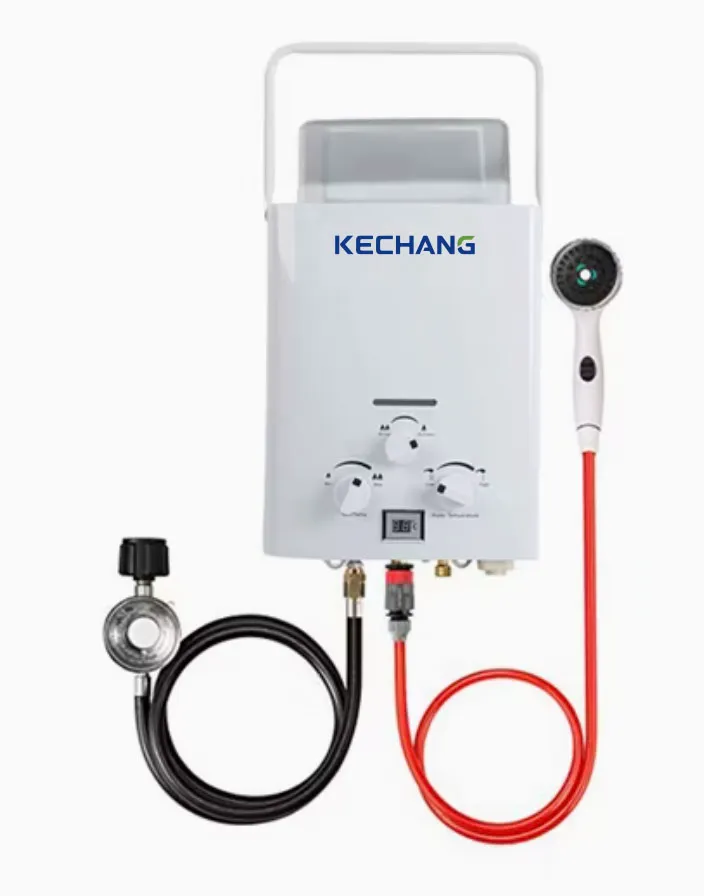
Choosing among gas water heater venting systems affects product compliance, installation cost, market acceptance, and after-sales risk. For importers and private-label brands, the exhaust layout also influences certification, shipping requirements, installer training, and overall product positioning.
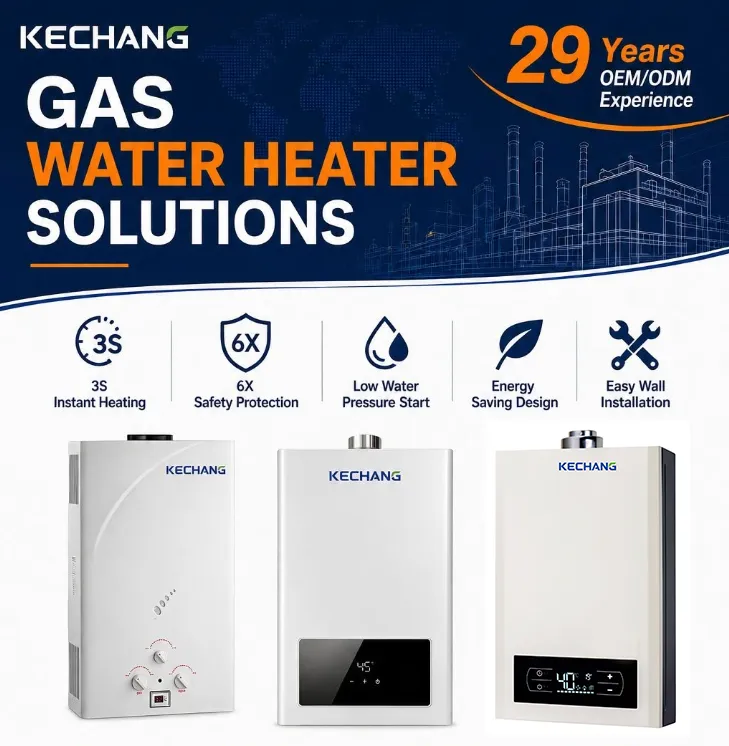
Why Venting Type Matters in Gas Water Heater Sourcing
How Venting Affects Compliance
Different venting systems may follow different safety, emission, clearance, and installation requirements. Before placing an order, importers should confirm the target country, fuel type, certification path, and applicable building and mechanical codes.
How Venting Affects Installation Cost
A lower factory price does not always mean a lower installed cost. Dedicated chimneys, coaxial pipes, wall penetrations, electrical requirements, installer training, and spare parts can materially change the end-user cost and the addressable market.
Gas Water Heater Venting Systems: Flue Exhaust vs Forced Exhaust vs Balanced Flue
Flue Exhaust Natural Draft
A flue-exhaust gas water heater, also called a natural-draft model, uses the rising temperature of combustion gases to move exhaust through a vertical flue. It is commonly considered for price-sensitive markets, traditional buildings, and areas where external electricity is unreliable.
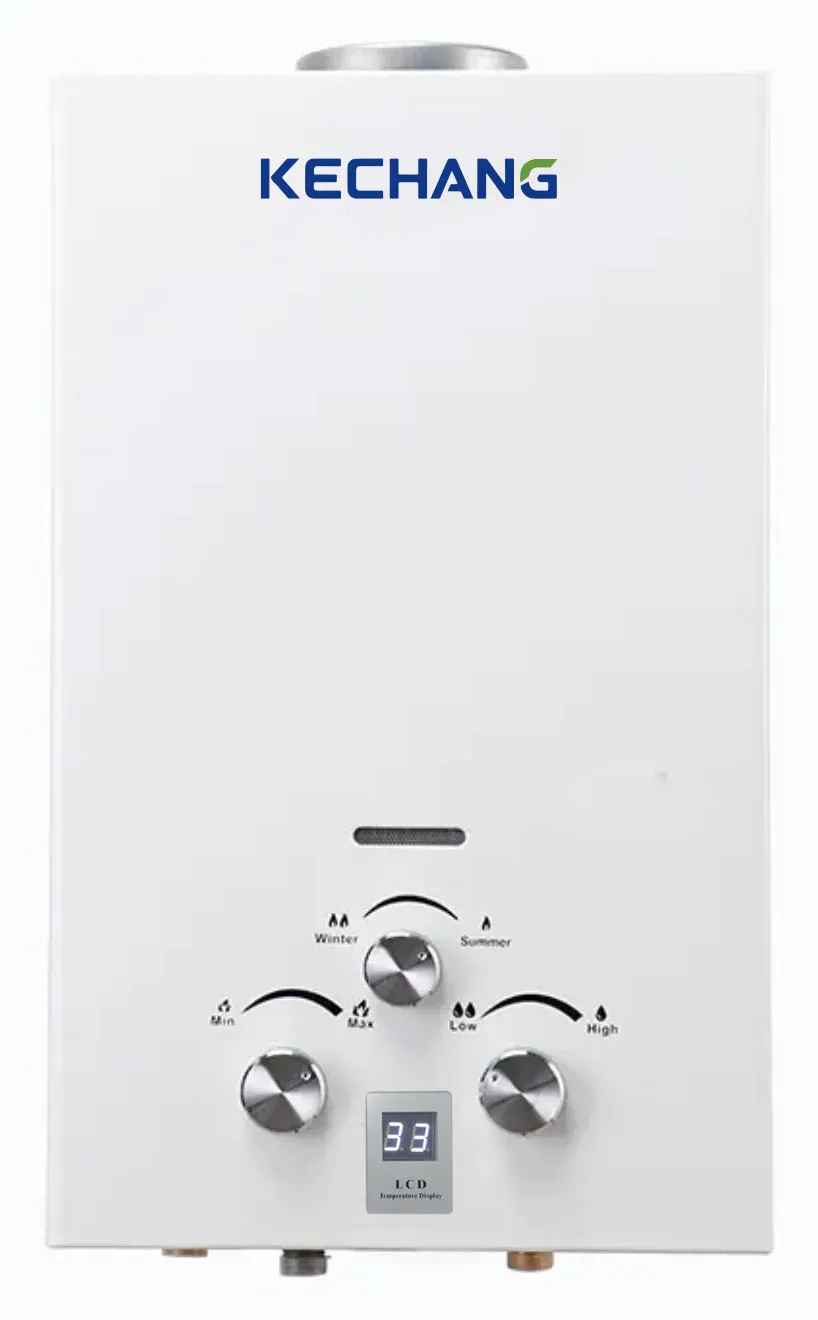
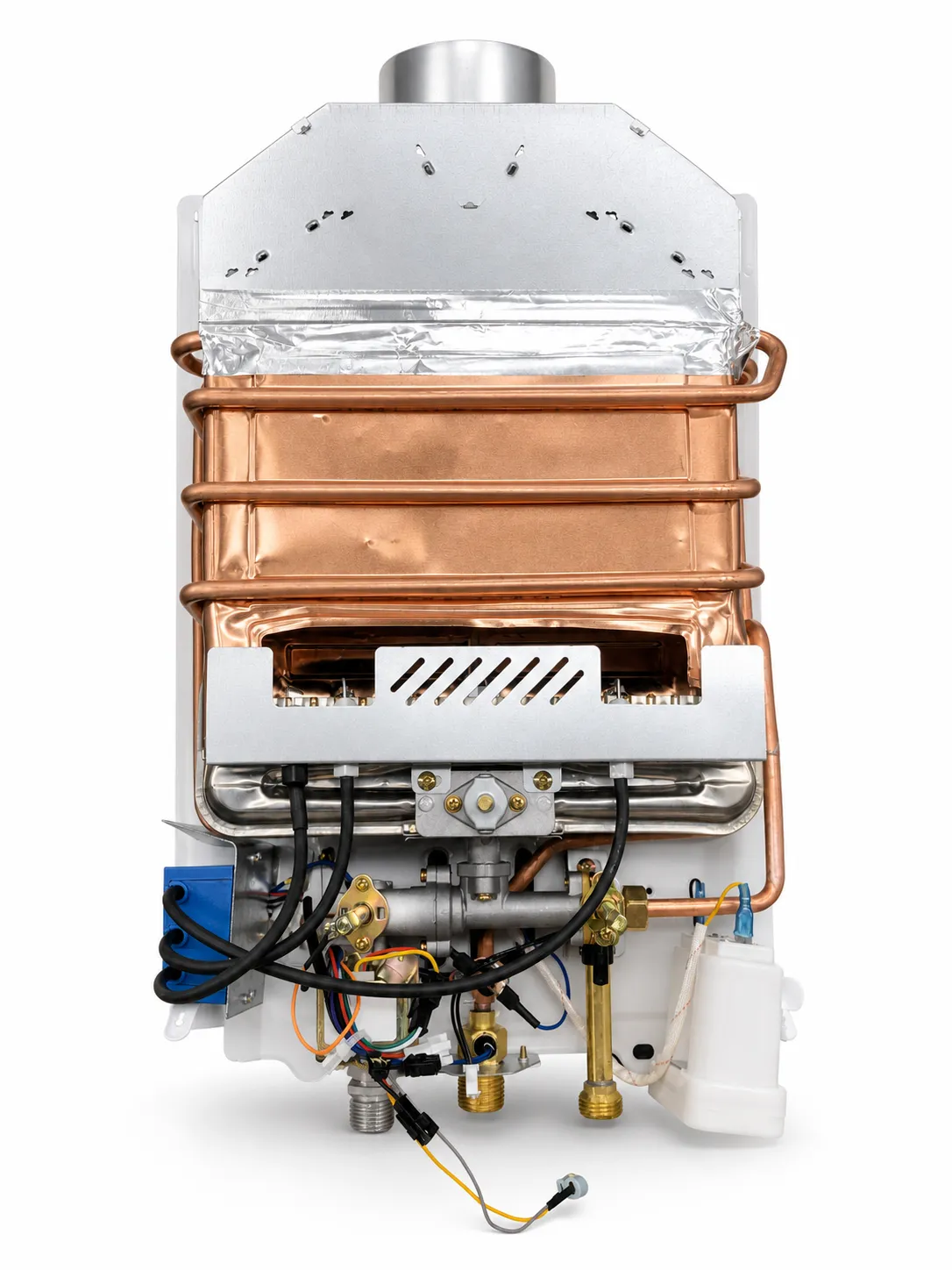
For buyers comparing a specific natural-draft configuration, this 6–20L LPG model provides a practical reference for capacity and fuel selection:
6-20L Propane/LPG Flue-Exhaust Tankless Gas Water Heater
Forced Exhaust
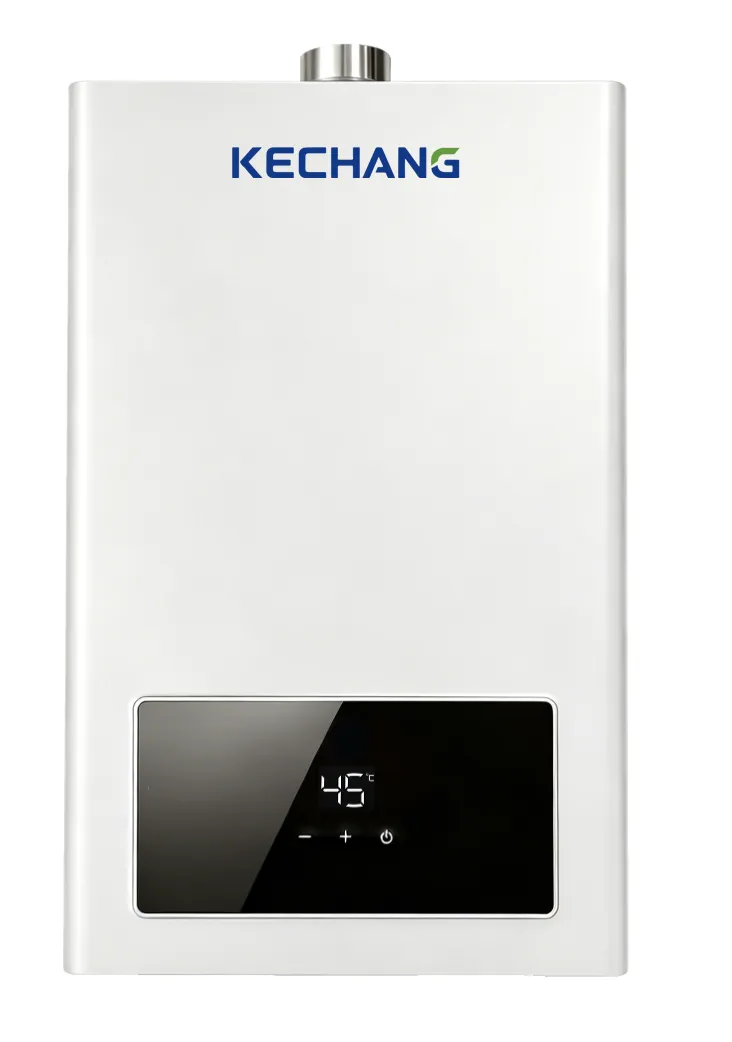
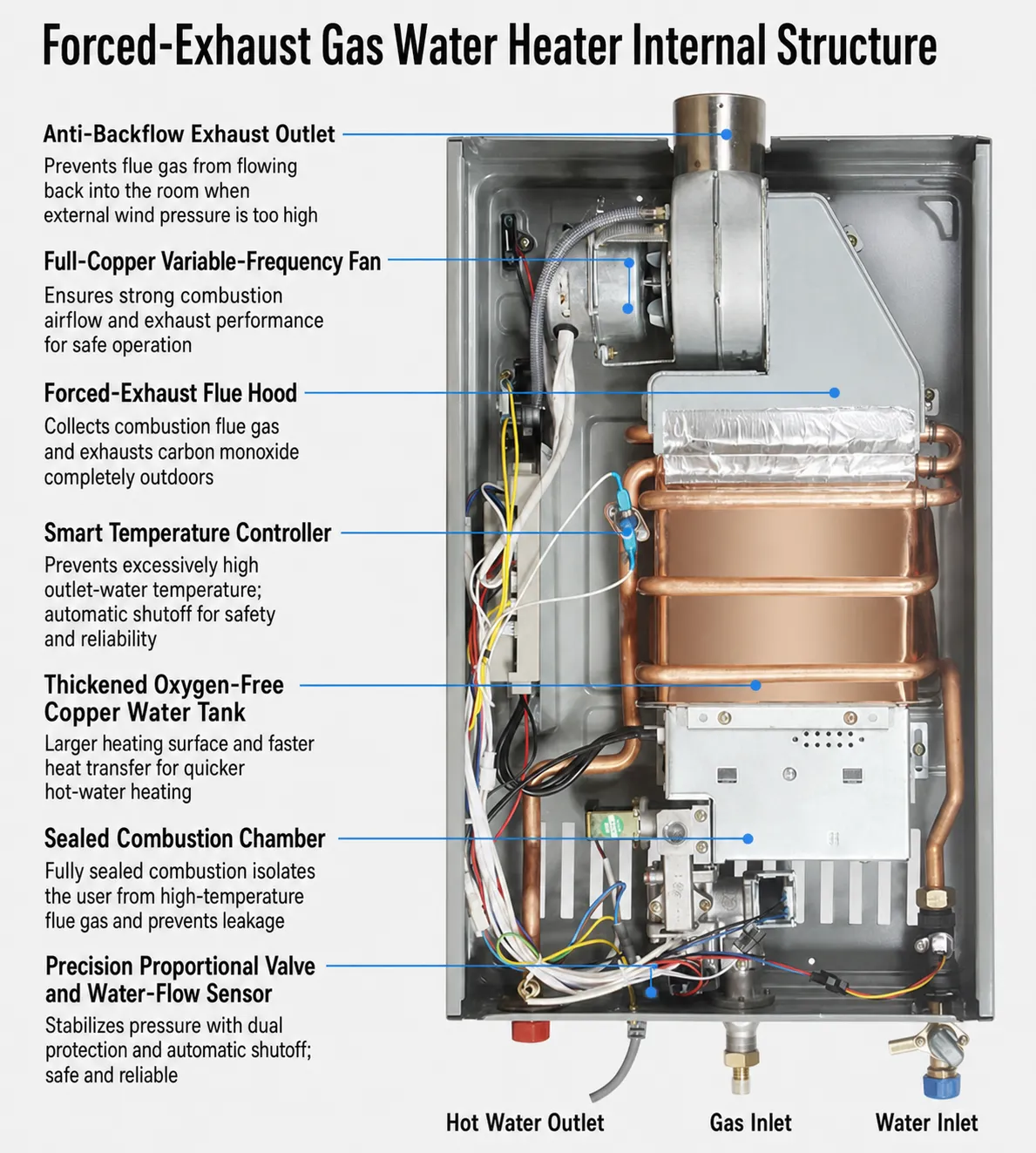
A forced-exhaust gas water heater uses a built-in fan to discharge combustion gases. It can support more flexible vent routes than a traditional vertical chimney and is often considered for apartments, renovations, modern homes, commercial buildings, and projects with limited vertical flue options. It normally requires a reliable electrical supply.
For a residential project example, the following forced-exhaust model shows how a flexible vent route can be matched to a defined capacity range:
7-12L Forced-Exhaust LCD Gas Water Heater for Residential Projects
Balanced Flue
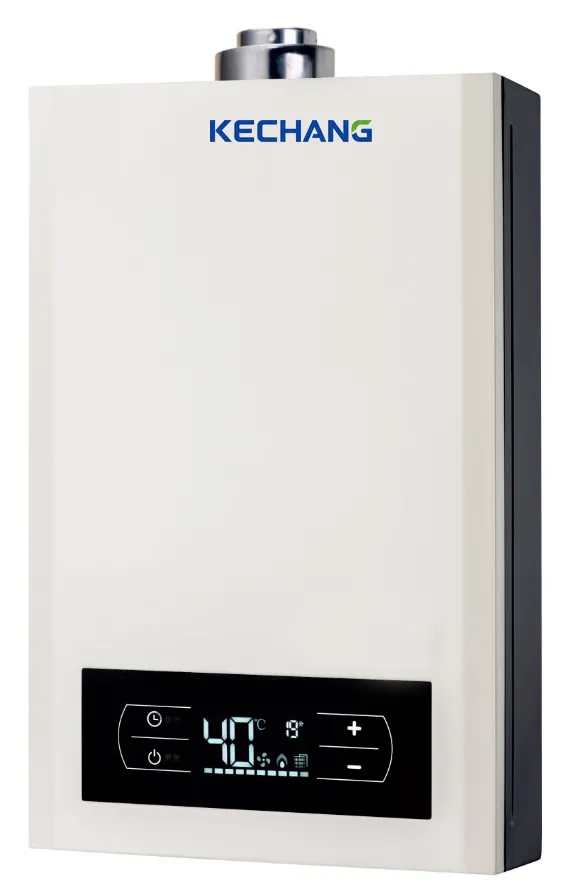
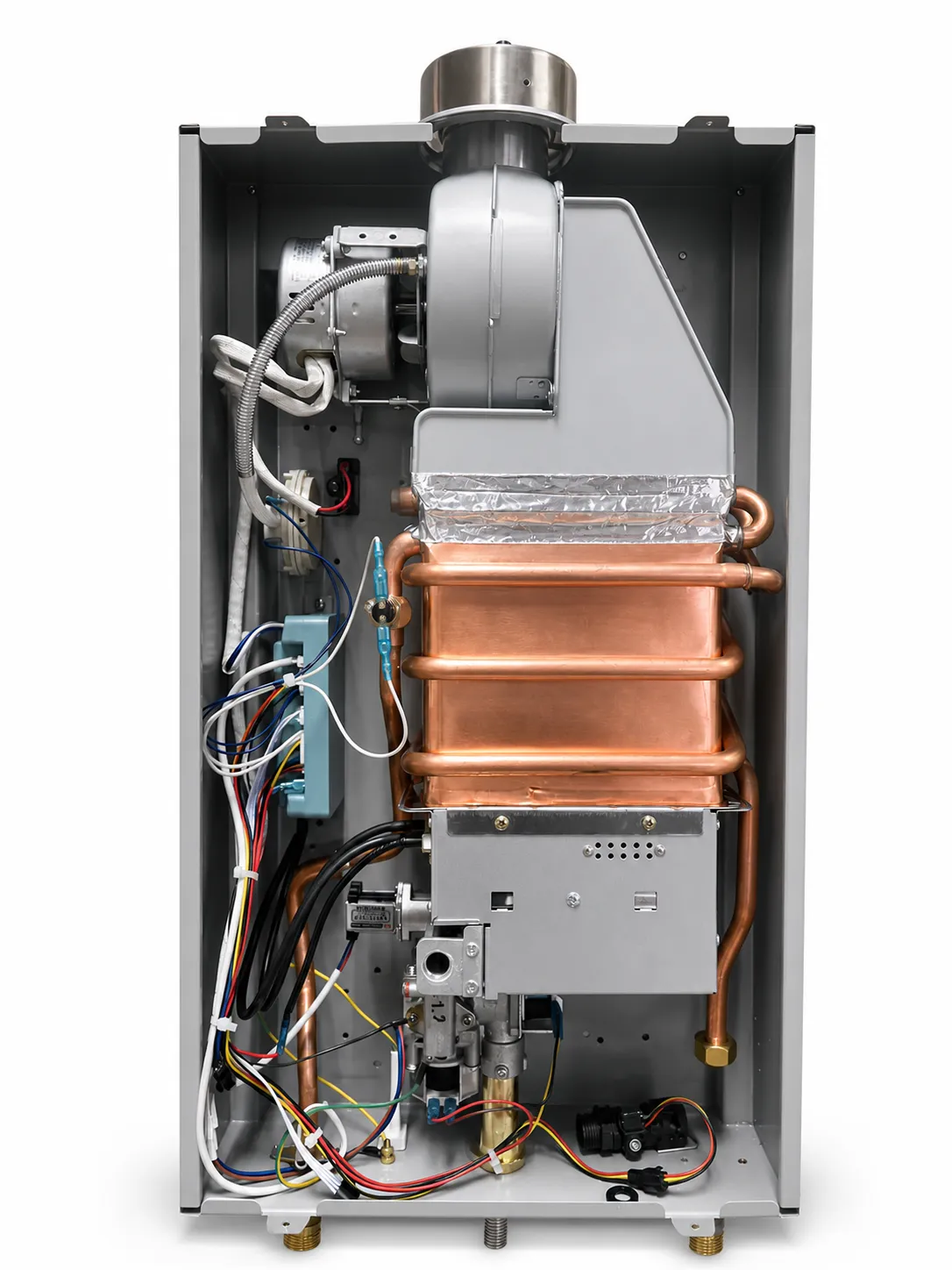
A balanced-flue gas water heater uses sealed combustion: it draws combustion air from outdoors and discharges exhaust through a dedicated flue arrangement, often a coaxial or dual-pipe system. This can suit high-density residential and commercial projects where indoor-air separation, installation flexibility, and controlled combustion are important.
For apartment and residential projects that require a sealed-combustion option, this balanced-flue product is a useful reference for further comparison:
7-20L Balanced Exhaust LCD Gas Water Heater for Apartment and Residential Projects
| Venting Type | Combustion Air Source | Exhaust Method | External Electricity | Installation Complexity | Commercial Positioning |
|---|---|---|---|---|---|
| Flue exhaust | Indoor room air | Natural vertical draft | Usually not required; some models use battery ignition | Moderate | Entry-level and price-sensitive |
| Forced exhaust | Indoor room air | Mechanical fan | Normally required | Low to moderate | Mid-tier and flexible installation |
| Balanced flue | Outdoor air | Mechanical fan | Normally required | High | Premium sealed-combustion positioning |
How to Select the Right System for Different Markets
Flue Exhaust for Unstable Power Supply
Flue-exhaust gas water heaters can be suitable for markets with unstable electricity when the selected model uses battery ignition and complies with local installation requirements. Buyers should still confirm the local chimney, combustion-air, and safety rules.
When low water pressure is the main purchasing constraint, review a model specifically designed for that application:
7-20L Low Water Pressure Forced Exhaust LCD Gas Water Heater
Low-Pressure Applications
For regions with low water pressure, buyers should evaluate models with low-pressure startup capability. See the low water pressure gas water heater page for the application focus. Depending on the building and pipework, a booster pump may also be required.
Forced Exhaust for Flexible Vent Routes
Forced-exhaust models use a fan to actively discharge combustion gases. They can be considered when a traditional vertical flue is unavailable or when the project requires a longer or more flexible vent route. Importers should confirm voltage, backup-power requirements, maximum vent length, and elbow limits.
For a broader forced-exhaust comparison across capacities, see the following product series:
7-20L Forced-Exhaust LCD Gas Water Heater Series Selection
Balanced Flue for Sealed Combustion Projects
Balanced-flue models can suit high-density residential and commercial projects where sealed combustion and reduced use of indoor air are important. Multi-unit linking, service access, wall penetrations, and shared spare parts can also affect the purchasing decision.
For an indoor sealed-combustion reference, compare this balanced-flue model and its installation positioning:
7-20L Balanced Flue Gas Water Heater for Indoor Installation
Gas Water Heater Compliance Checklist for Importers
Fuel Conversion and Product Labels
- Check LPG and natural-gas adaptation requirements and approved conversion procedures.
- Ensure rating plates and warning labels meet regional language and format rules.
- Confirm gas pressure, burner-orifice, valve, and voltage specifications for the target market.
Manuals, Packaging and Shipping
- Require installation and user manuals appropriate for local codes and languages.
- Validate packaging and transport requirements for international shipping.
- Confirm spare-parts lists, installer training, warranty terms, and service procedures.
Venting Materials and Installation Requirements
Materials by Venting Type
Material requirements depend on the appliance, venting category, local code, and manufacturer manual. The selected quotation should clearly state whether vent pipes, fittings, terminals, and other accessories are included.
For a general technical reference on gas-fired tankless water heaters and venting considerations, see the U.S. Department of Energy gas-fired tankless water heater guidance.
Flue Exhaust Pipe Requirements
For the current product range, the flue-exhaust model may not require an additional stainless-steel flue pipe in some configurations. This must be confirmed against the specific model manual and local installation code before publication or quotation.
Forced Exhaust and Balanced Flue Pipe Requirements
For forced-exhaust and balanced-flue models, confirm the required pipe material, diameter, wall terminal, and included accessories in the model quotation. Do not substitute local installer practice for the manufacturer specification.
Installation Parameters
Vent Length and Elbows
Confirm the maximum allowable equivalent vent length and the maximum number of elbows for each model.
Air Intake and Exhaust Balance
For balanced-flue designs, verify the permitted relationship between the air-intake pipe and exhaust pipe. The exact limits must follow the model manual.
Slope and Condensation Control
Balanced Flue Downward Pitch
Where required by the model manual, a balanced-flue exhaust route may need a specified downward pitch to reduce the risk of condensation entering the heater.
Backdrafting and After-Sales Risk Control
Causes of Backdrafting
Negative air pressure can create a major after-sales risk for natural-draft units. Kitchen hoods, bathroom fans, clothes dryers, and airtight buildings can change the pressure balance and allow combustion gases to spill back into living spaces.
Installer and Warranty Controls
Manufacturers and distributors should provide clear installation manuals, makeup-air guidance, and commissioning procedures. Local installers should check pressure conditions and complete professional combustion and safety checks before handover. A simple match test is only a rough indication and cannot replace professional instruments. Warranty terms should also distinguish installation or room-air problems from component defects.
How to Evaluate a Gas Water Heater Manufacturer
Factory and Product Testing
Factory checks should cover output, line automation, aging tests, gas seals, ignition runs, electrical tests, and final quality checks.
OEM and ODM Support
Review casing options, fuel configurations, voltage choices, control panels, labels, manuals, packaging, and the supplier’s ability to support market-specific documentation.
Export and After-Sales Readiness
Check test files, packing plans, spare-parts lists, service training, warranty terms, lead times, peak-season capacity, component sourcing, shortage risks, and defect-handling procedures.
Cost and Market Positioning
Total Cost Beyond Factory Price
The total sourcing cost can include vent pipes, custom fittings, packaging, testing, ocean freight, insurance, local labor, installer training, spare parts, and warranty reserves. A balanced-flue unit may have a higher factory purchase price than a natural-draft unit, but it may fit projects where sealed combustion and indoor-air separation are important.
Positioning by Power Supply and Installation Conditions
Forced-exhaust models may fit mid-tier urban markets that need horizontal or flexible venting and have reliable electricity. Balanced-flue systems may support premium projects with stricter indoor-air and installation requirements. Natural-draft units may remain suitable for markets with unstable power and traditional vertical flues, subject to local code.
Gas Water Heater Importer Sourcing Checklist
Product and Market Requirements
- Target country and regional compliance standards.
- Fuel type, gas pressure, voltage, and water-pressure conditions.
- Minimum startup flow rate and capacity in liters or gallons per minute.
- Venting type based on local building stock and installer capability.
- Required certification marks and laboratory reports.
Commercial and After-Sales Requirements
- Minimum order quantity and volume discount tiers.
- Standard lead time and peak-season production schedule.
- Spare-parts ratio and component availability.
- Warranty duration and claim-processing procedure.
- OEM or ODM requirements for branding and design.
FAQ for Importers, Distributors and Brand Owners
Which gas water heater venting system is best for my market?
It depends on local building codes, electricity stability, fuel type, available installation routes, and installer skill levels.
What is the difference between LPG and natural-gas models?
They use different burner orifices, valves, and combustion settings to match different gas pressures and fuel characteristics.
Can one gas water heater support both LPG and natural gas?
Some models support conversion when the manufacturer provides an approved conversion kit and instructions. Conversion should not be performed without the correct parts and procedure.
Which model is suitable for low water pressure or unstable electricity?
Battery-operated natural-draft models may suit unstable electricity. For low water pressure, select a model with verified low-pressure startup performance and confirm the minimum flow requirement.
Can the product be customized with our brand?
OEM customization may include panels, labels, manuals, packaging, and selected components. The exact scope should be confirmed in the quotation and technical agreement.
Can you provide installation manuals in multiple languages?
Many export manufacturers can provide translated or localized manuals. The final language, format, and technical review requirements should be agreed before production.
What is the standard MOQ and typical lead time?
MOQ and lead time depend on the model, customization, order quantity, and production schedule. Confirm the current commercial terms before publishing a fixed number.
Are spare parts available and what warranty support is provided?
Spare-parts allowances and warranty coverage vary by model and contract. They should be stated in the quotation and warranty terms.
Can samples be provided before bulk orders?
Sample testing is recommended before finalizing a container order, especially when the target market has specific gas, venting, voltage, or certification requirements.
Can a gas water heater work with a solar hot-water system?
Only selected models support preheated-water or solar-booster applications. Confirm the inlet-temperature range and control logic with the manufacturer.
Which venting system is easier for local installers?
Natural-draft models may be more familiar in markets with traditional chimneys. Coaxial balanced-flue systems may require installers with experience in wall penetrations and sealed-combustion installation.
Conclusion
This gas water heater venting systems comparison helps importers match compliance, installation cost, product positioning, and after-sales performance. Importers should match the venting design to local codes, power supply, building conditions, installer capability, and target customer expectations.
Looking for a gas water heater supplier for your market? Contact Kechang Contact Usfor product specifications, OEM/ODM options, and a factory quotation.