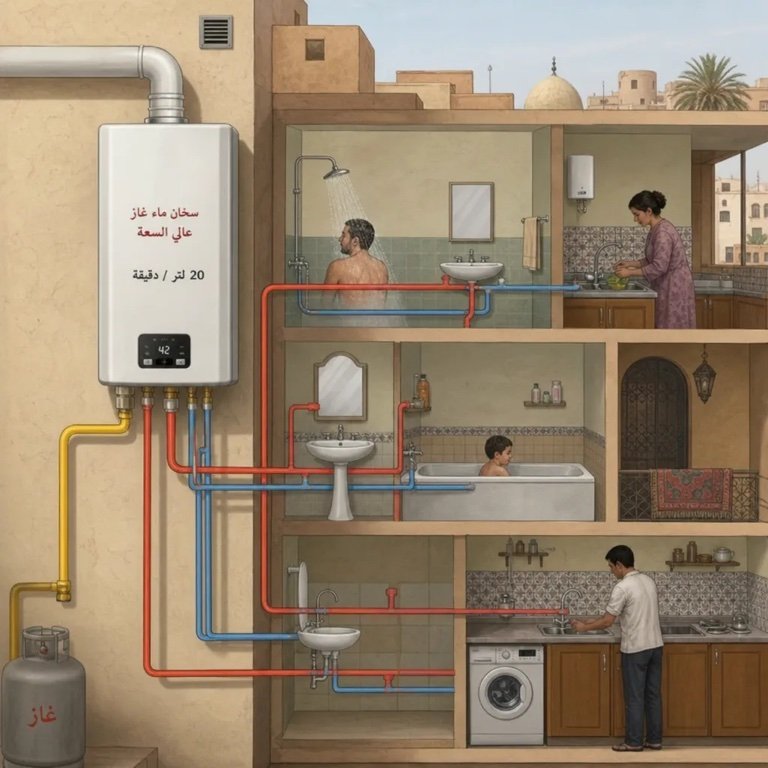
The water tank of a gas water heater is also called the gas water heater heat exchanger. Different materials and structures affect procurement costs, heat transfer, and subsequent maintenance. The heat exchanger configurations of flue-type, forced-draft, and balanced-type models differ, and importers and brand owners can choose according to product positioning and budget.
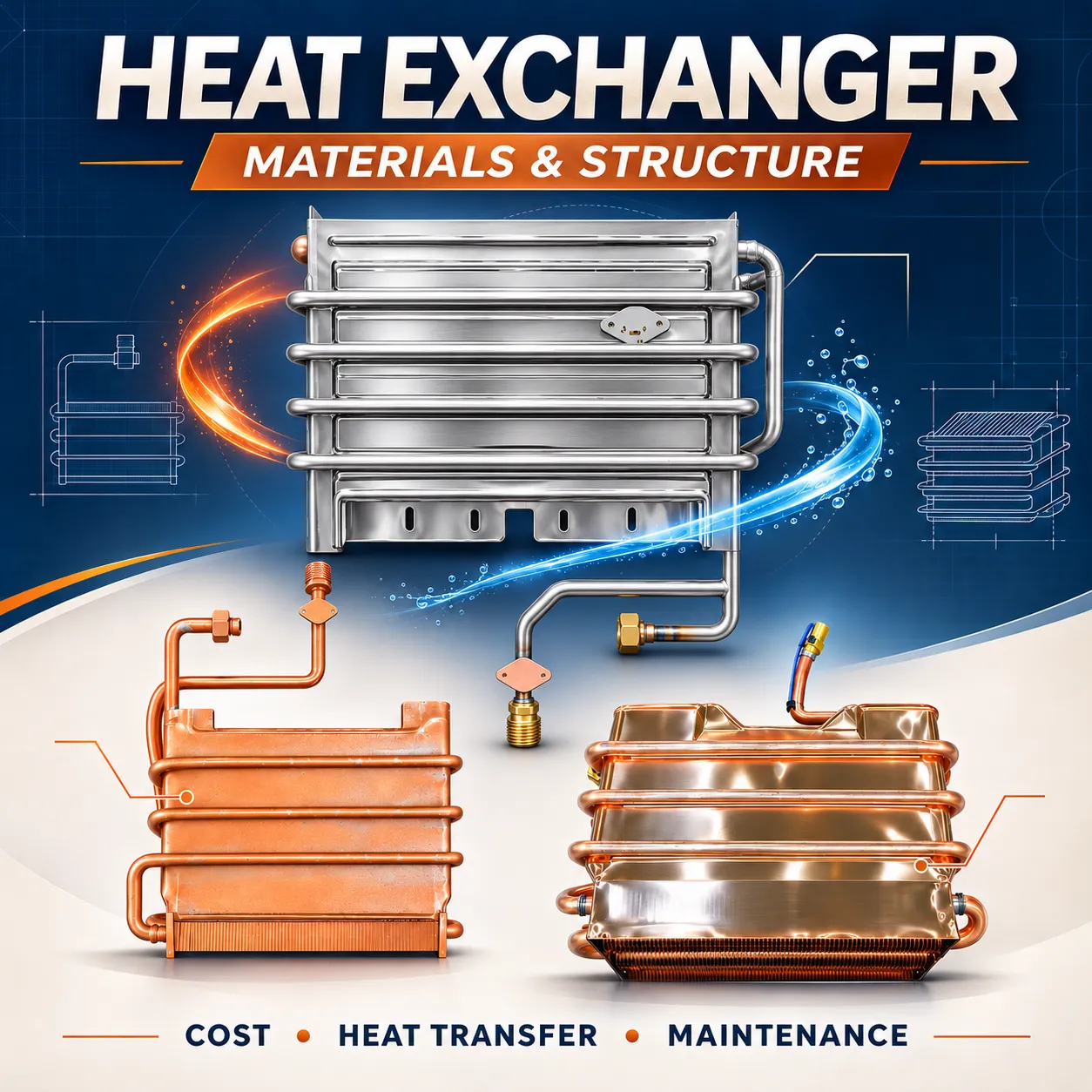
Flue Gas Water Heater Heat Exchanger: Material Comparison
| Heat Exchanger Material | Advantages | Disadvantages and Notes | Suitable Buyers |
|---|---|---|---|
| aluminum heat exchanger | Lower price | Pay attention to wall thickness, corrosion protection, and welding quality to reduce leakage risk | Importers targeting price-sensitive markets |
| stainless steel heat exchanger | Tank body and water pipes are stainless steel; nuts and heat-absorbing fins are copper; price lower than copper heat exchanger | The thermal conductivity of the stainless steel parts is lower than that of copper | Wholesalers looking to balance price and durability |
| tin-coated copper heat exchanger | Copper surface is coated with tin, which reduces direct exposure of the copper surface; price lower than oxygen-free copper | Copper material cost is relatively high | Brand owners who need a copper heat exchanger while watching their budget |
| oxygen-free copper heat exchanger | Copper has good thermal conductivity | Higher price | Brand owners who value heat transfer performance and have sufficient budget |
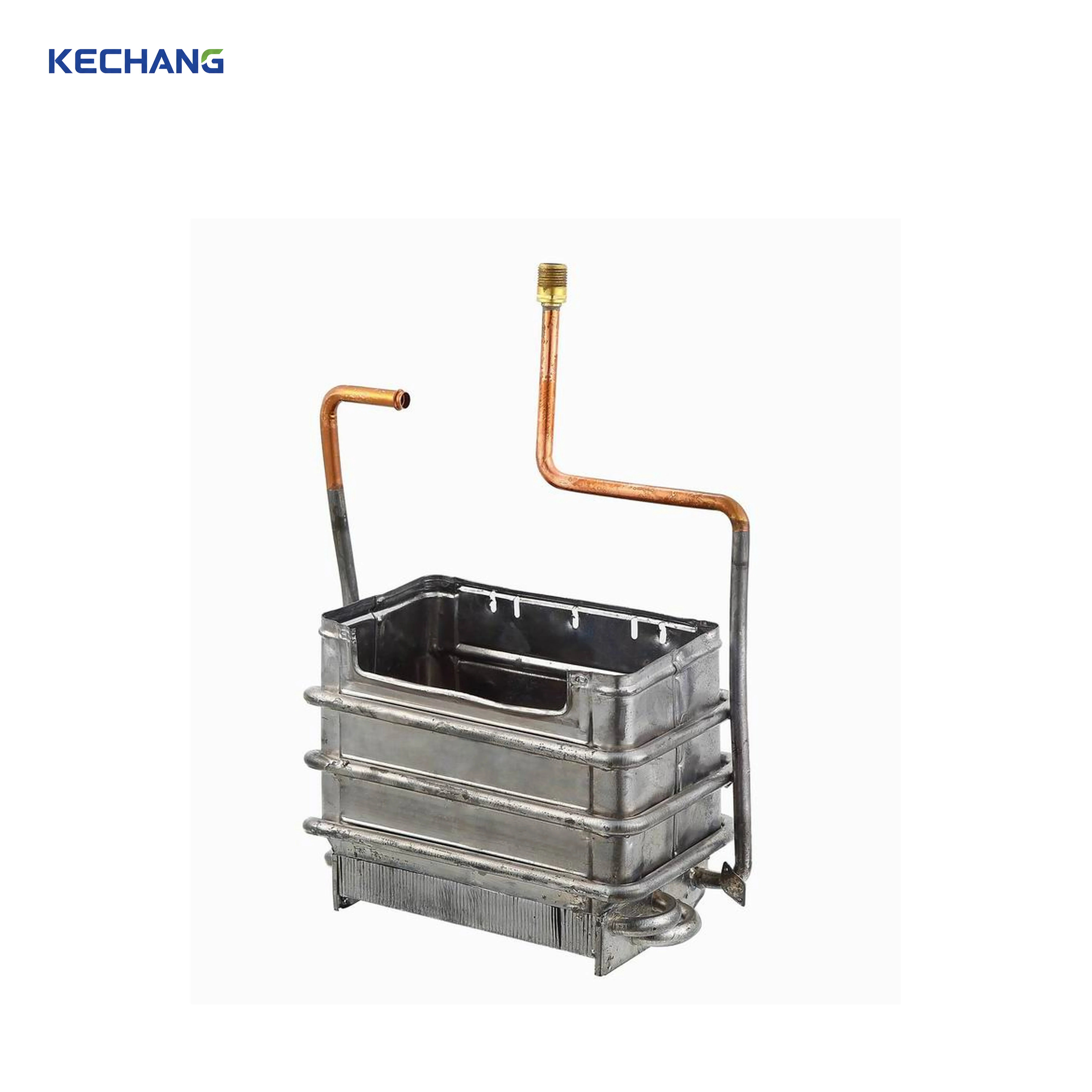
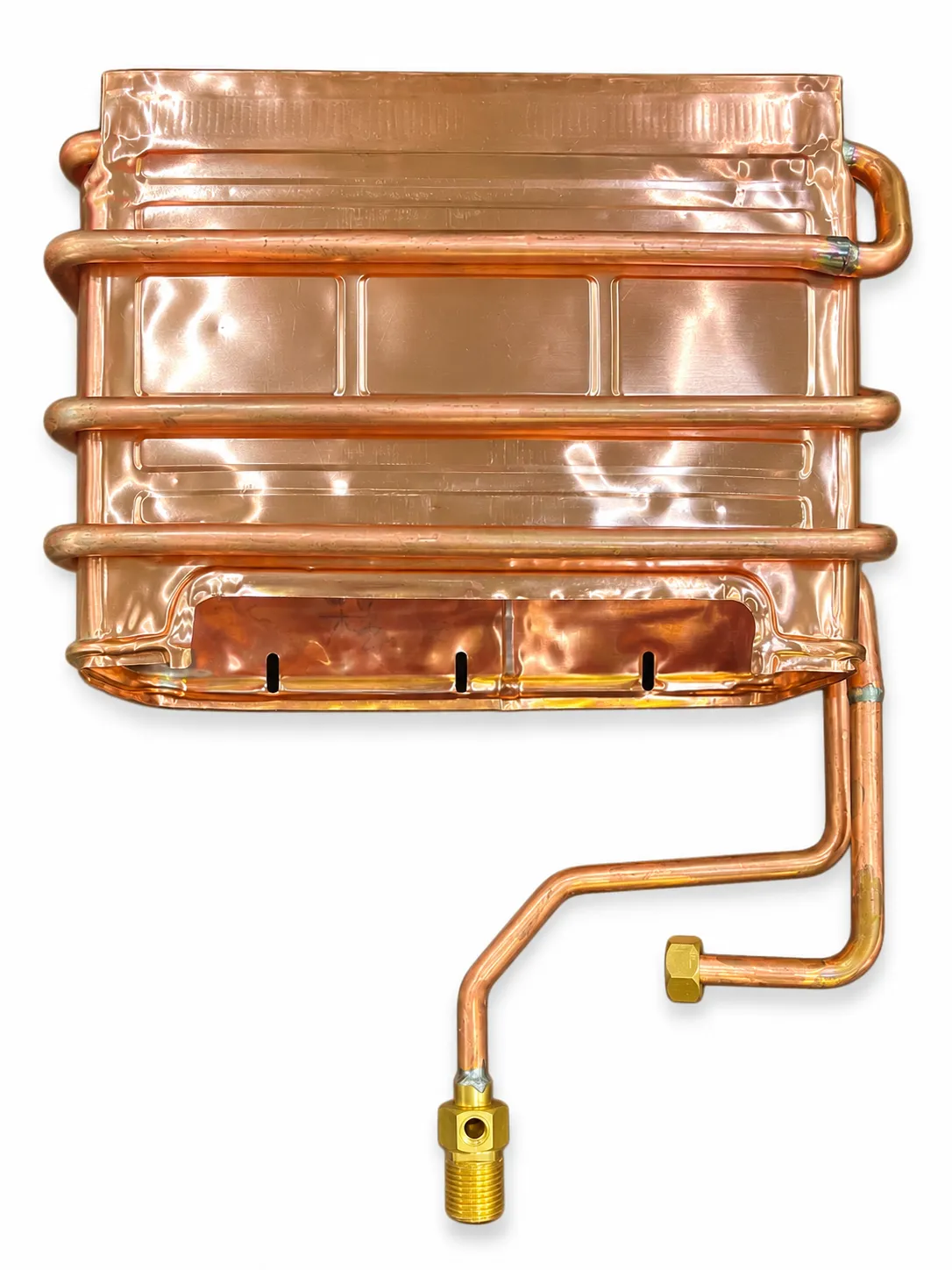
Tin-coated copper heat exchanger. Free oxygen copper heat exchanger
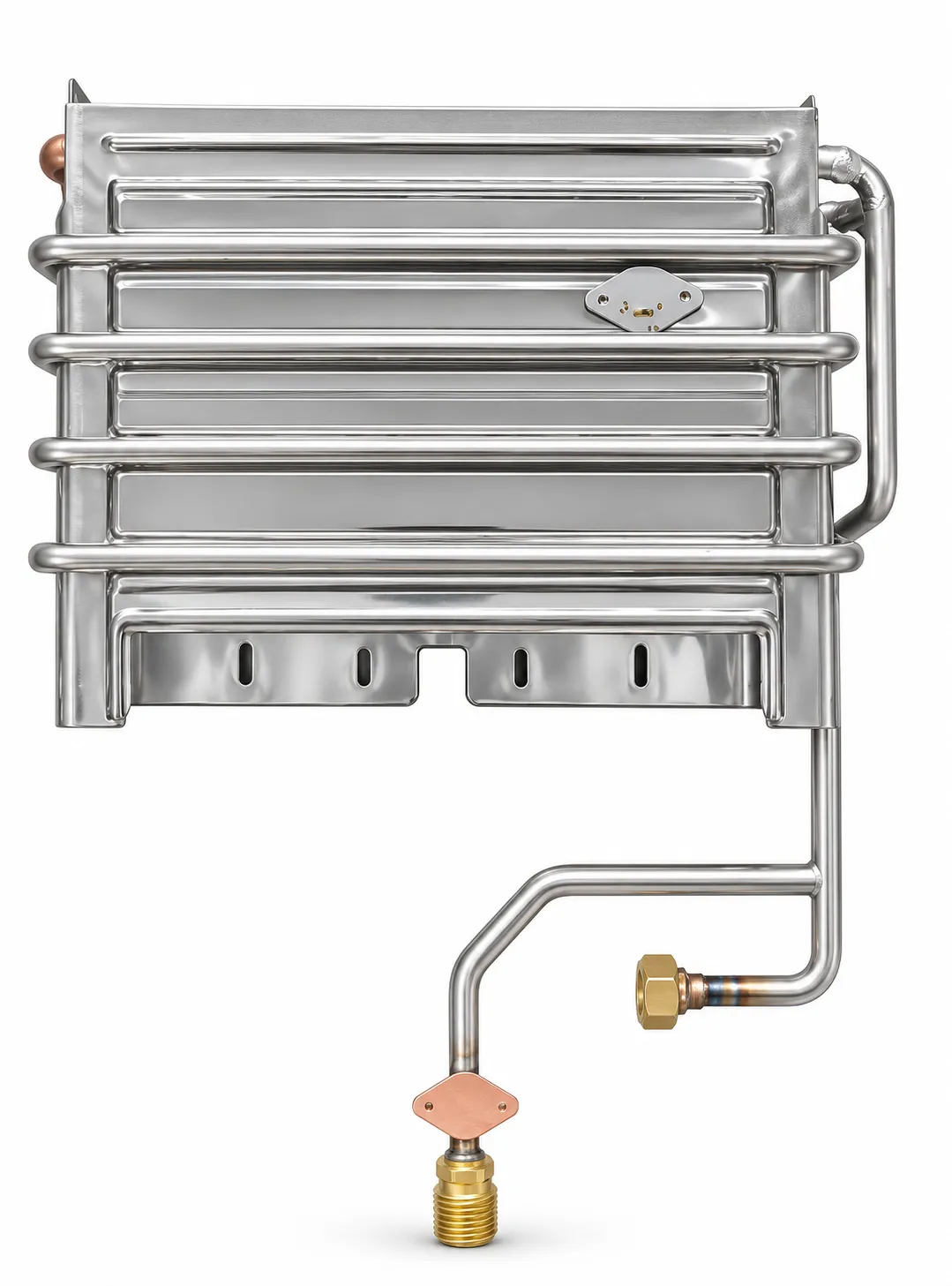
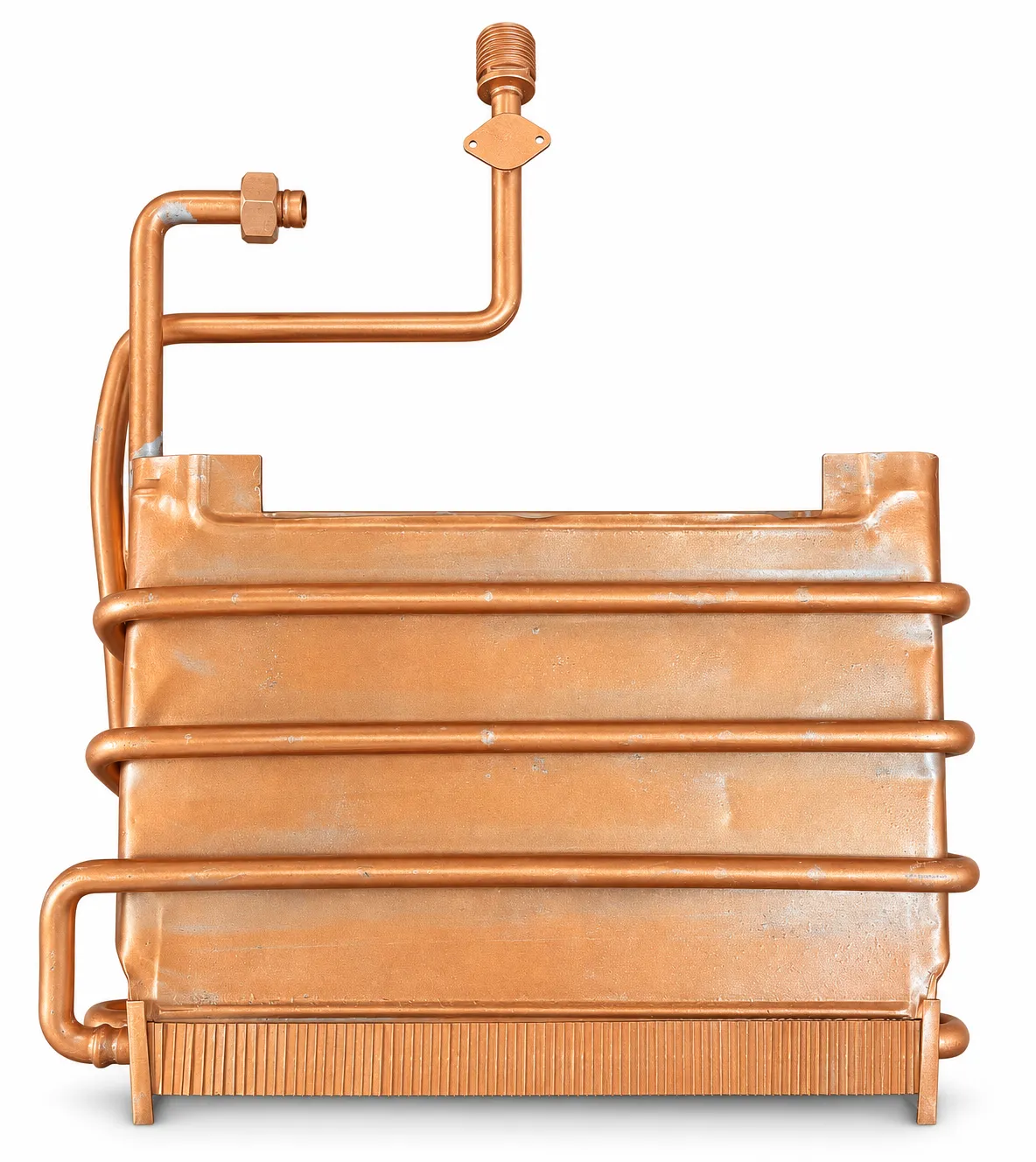
Stainless steel heat exchanger Aluminum heat exchanger
Note: For the stainless steel gas water heater heat exchanger, the tank body and water pipes are stainless steel, while the nuts and heat-absorbing fins are copper. It is not an all-stainless-steel heat exchanger.
To learn about the heat exchanger configurations available for flue-type models, see 6–20L Flue Gas Water Heater Heat Exchanger.
Forced-Draft and Balanced-Type Gas Water Heater Heat Exchanger Comparison
| Heat Exchanger Type | Advantages | Disadvantages and Notes | Suitable Buyers |
|---|---|---|---|
| Silent chamber heat exchanger | Tank body is stainless steel; water pipes and heat-absorbing fins are copper; price lower than oxygen-free copper heat exchanger | The thermal conductivity of the stainless steel parts is lower than that of copper | Importers who want to control costs while using copper water pipe configurations |
| oxygen-free copper heat exchanger | All-copper solution, better heat transfer performance | Higher price | Brand owners targeting the mid-to-high-end market |

oxygen-free copper heat exchanger
To purchase copper heat exchanger accessories for forced-draft or balanced-type units, see 6–20L Forced/Balanced Heat Exchanger.


Silent chamber heat exchanger
https://kechangwaterheater.com/products/6-20l-gas-water-heater-heat-exchanger-service-stock/
gas water heater heat exchanger price, Thermal Conductivity, and Durability Ladder
| Comparison Item | Lower → Higher | Notes |
|---|---|---|
| gas water heater heat exchanger price | aluminum gas water heater heat exchanger → stainless steel gas water heater heat exchanger → tin-coated copper heat exchanger → oxygen-free copper heat exchanger | tin-coated copper heat exchanger is usually lower than oxygen-free copper heat exchanger; different models and capacities require separate quotations. |
| Material thermal conductivity | Stainless steel → Aluminum → Copper | This is a comparison of the materials themselves. |
https://en.wikipedia.org/wiki/Thermal_conductivity
To learn about the relationship between copper tube thickness, welding, and heat exchanger matching, read How Copper Tube Thickness Affects Gas Water Heater Performance.
How Does Our Factory Check gas water heater heat exchanger Quality?
- Hydrostatic leak test: Confirm whether there is leakage at the water pipes, connections, and welds under specified test conditions.
- Weld inspection: Check whether there are obvious defects at the welded parts and confirm that the water pipes and joints are firmly connected.
- Appearance inspection: Check whether the tank body, heat-absorbing fins, and water pipes have obvious deformation or damage.
- Material and dimension verification: Verify the materials of the tank body, water pipes, and heat-absorbing fins, as well as whether the heat exchanger dimensions match the selected model.
How to Choose a gas water heater heat exchanger?
When requesting a quotation from a gas water heater heat exchanger supplier, it is recommended to provide the model, gas type, target market, and budget, and to confirm the heat exchanger material. The final configuration and gas water heater heat exchanger price are subject to the specific model and quotation.
If you need to purchase a gas water heater heat exchanger or learn about OEM and CKD supporting solutions, please provide KECHANG with your target market, model and capacity, gas type, required heat exchanger material, estimated purchase quantity, and target port. If you have original photos, dimension drawings, or samples, please also provide them so that we can verify compatibility and quote. The specific configuration, minimum order quantity, and delivery time are subject to the confirmed quotation.
Email: info@kechangwaterheater.com