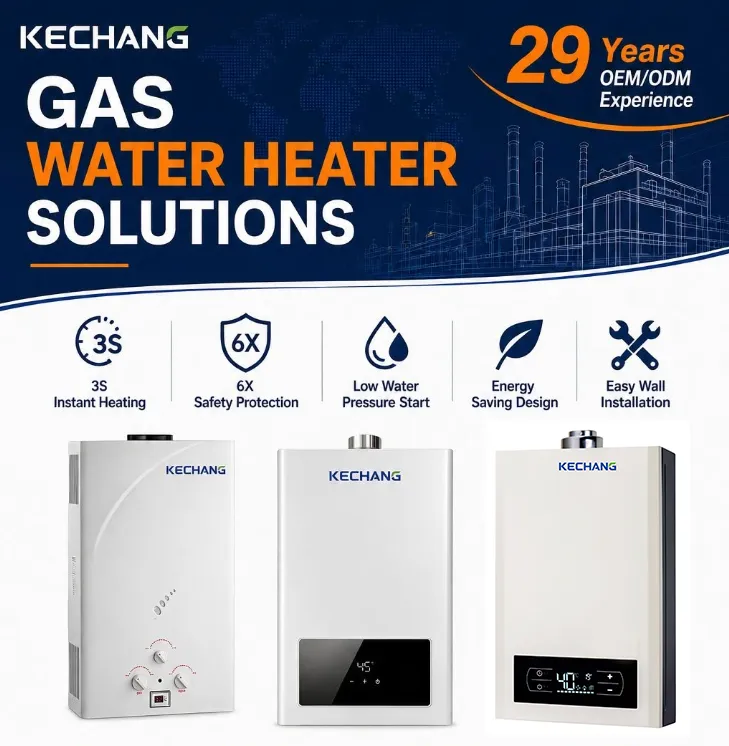
Outdoor gas water heater selection requires more than comparing price and capacity. Outdoor installation exposes the appliance to rain, dust, temperature changes, wind, and difficult service conditions. Homeowners, distributors, installers, hotels, and project buyers should confirm fuel compatibility, weather protection, exhaust design, water pressure, spare parts, and local installation requirements before placing an order.
1. Outdoor Gas Water Heater Application and Installation Location
Start by documenting where the outdoor gas water heater will be installed and how many outlets will use hot water. A private home, apartment, hotel, worker accommodation, campsite, and construction project can have very different demand profiles. Record the number of showers, sinks, operating hours, local climate, incoming-water temperature, and expected simultaneous flow.
Outdoor placement does not mean the heater can be installed anywhere. Keep the unit away from combustible materials, standing water, heavy spray, and areas where exhaust can enter doors or windows. The mounting surface should be stable, accessible for maintenance, and suitable for the appliance weight and pipe connections.
2. Outdoor Gas Water Heater Fuel, Capacity, and Water Flow
An LPG model must match the local gas composition, regulator, inlet pressure, and connection standard. Ask the supplier whether the unit is factory-configured for LPG, whether natural-gas conversion is available, and which conversion parts and instructions are supplied. Fuel conversion should be completed and tested by a qualified professional.
Capacity is normally expressed in litres per minute at a stated temperature rise. A 10L model may be suitable for one shower or a small household, while hotels and multi-bathroom projects may need multiple units or a larger system. Compare the rated flow with the required temperature rise rather than selecting a model by litre number alone.
- Confirm minimum start-up water pressure and activation flow.
- Check the maximum water pressure and pressure-relief requirements.
- Compare incoming cold-water temperature with the target outlet temperature.
- Ask whether the heat exchanger is tin-coated copper or oxygen-free copper.
- Verify the gas connection, water connection, and electrical or battery requirements.
3. Check weather protection and freeze risk
Outdoor gas water heaters need protection from rain, snow, dust, salt air, and direct sunlight. Ask for the product’s actual enclosure and installation limitations instead of relying on a general outdoor-use label. A cover may protect the cabinet, but it must not block combustion air or exhaust.
Freeze protection is especially important in cold climates. Water trapped in the heat exchanger or pipes can expand and cause damage. Confirm whether the model has an approved anti-freezing function, whether it requires electricity or batteries, and what additional drainage procedure is recommended when the unit will be unused.
In coastal or humid locations, review coating quality, fastener materials, heat-exchanger protection, and spare-part availability. These details affect long-term maintenance more than the initial gas water heater cost.
4. Review ventilation and exhaust requirements
Outdoor installation still requires safe combustion and exhaust clearance. A flue-exhaust model must discharge combustion gases away from windows, doors, air intakes, walkways, and neighbouring properties. Follow the appliance manual and local fuel-gas and building codes for flue length, termination position, and clearances.
Do not place an outdoor unit in a confined balcony, enclosed cabinet, or poorly ventilated service area unless the manufacturer and local code specifically allow it. Yellow flames, soot, unusual combustion noise, condensation, or a carbon-monoxide alarm require the appliance to be shut down safely and inspected by a qualified technician. The CDC carbon monoxide safety information explains why combustion ventilation must be treated seriously.
5. Evaluate the factory before a project order
For B2B sourcing, the right outdoor gas water heater should be matched to the destination market before you request a complete technical quotation. It should identify the model, LPG configuration, capacity, rated heat load, water-pressure range, heat-exchanger material, ignition method, exhaust type, dimensions, packaging, and optional features such as LCD display, winter-summer switch, low-pressure start-up, and anti-freezing protection.
Before a bulk order, ask for a sample or inspection unit. Test ignition, flow stability, temperature control, flame-out protection, over-temperature protection, water-pressure response, and packaging durability under conditions that match the destination market.
- Confirm MOQ, sample lead time, production lead time, and monthly supply ability.
- Request manuals, wiring diagrams, installation drawings, and spare-parts lists.
- Confirm private-label branding, carton design, nameplate language, and warranty terms.
- Agree on pre-shipment inspection, payment terms, port, and replacement-part support.
- Check whether the factory can provide documents required by the destination market.
For a product reference, review the 10L LPG digital LCD tankless gas water heater. For company background, visit the Company Profile, or send a project specification through Contact Us.
Portable Hot Water for Camping, RV Trips, and Outdoor Washing
For camping, a hot-water setup beside an RV, or washing pets and horses outdoors, a handled 5.5–6L portable gas water heater may fit better than a permanently wall-mounted household model. Its carry handle makes the unit easier to move between suitable locations, and the intended portable setup does not require drilling or nailing it to a wall.
Set up and connect the selected model according to its manual and local rules. If additional rain protection is needed, consider a separate rain canopy only where the model instructions permit it; keep combustion-air openings and exhaust unobstructed. Do not operate a gas appliance inside a tent, RV, or other confined space unless the exact model is expressly approved for that location.
Before ordering, confirm the fuel version, water source, hose and shower accessories, and current model availability. Contact our team with the intended use and target market to verify the applicable specification and setup requirements: Contact Kechang.
6. Plan installation and routine maintenance
Outdoor LPG gas water heater installation should be completed by a qualified installer familiar with local gas and plumbing codes. The installer should verify the regulator, gas pressure, water connections, flue clearance, mounting, isolation valves, and leak testing before commissioning.
Routine maintenance includes keeping the air inlet and exhaust terminal clear, checking visible connections for leaks or corrosion, cleaning approved filters, monitoring error codes, and arranging professional combustion checks. Scale flushing and gas-valve adjustment should follow the manufacturer’s instructions.
Frequently asked questions
Can an outdoor LPG gas water heater be installed in an open area?
It can be installed outdoors only when the model is designed for outdoor use and the location meets the manual’s clearances, ventilation, weather, gas, and exhaust requirements. An open area must still protect the appliance from unsafe exposure and obstruction.
Is an outdoor tankless gas water heater suitable for a hotel?
It may be suitable for a small hotel or a modular project when the capacity, incoming water temperature, peak demand, and service plan are correctly calculated. Larger projects may require multiple units, storage, or a central hot-water design.
Does an LPG water heater need electricity?
Some models use batteries or water-flow ignition, while others need mains electricity for electronic controls or forced exhaust. Confirm the exact ignition and control system before installation.
How do I protect the heater in winter?
Confirm the approved anti-freezing function and drainage procedure. Do not add an unapproved heating device or block the air inlet. In freezing conditions, follow the manual and arrange professional advice.
Final buying checklist
A reliable outdoor gas water heater purchase should match the fuel, capacity, pressure, climate, installation location, exhaust design, service plan, and project documentation. Compare complete specifications and factory support rather than choosing the lowest quotation. This approach helps importers and end users reduce installation problems, warranty disputes, and long-term maintenance cost.
Related Gas Water Heater Resources
For a structured sourcing checklist, read our gas water heater buying guide.
To compare available models and configurations, browse our gas water heater products.
To explore Kechang’s product categories and export services, visit the Kechang home page.
To understand production capability and OEM/ODM support, see the Gas Water Heater Factory Tour.
For inspection procedures and quality evidence, review the Quality Control page.